
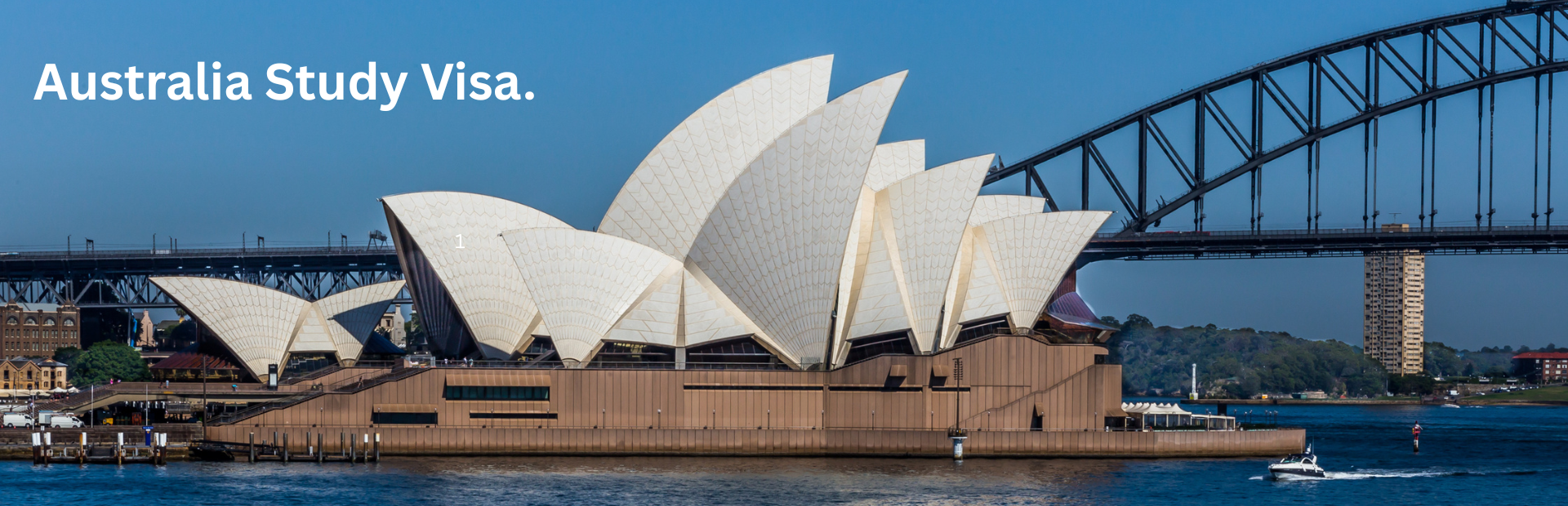
Australia Study Visa| Top Universities, Courses & PR Pathways.
Why Study in Australia ?
Study in Australia – Features, opportunities & much more...
Australia is an attractive place for international students seeking to advance their education and strengthen their career prospects. Top universities in Australia are setting global standards of excellence for overseas students with their dynamic courses, study programs, extensive student support services, outstanding training facilities, and cultural persity. Australia is known for its welcoming environment for students studying globally ranked institutions. Australian universities consistently get higher rankings in Q.S. World University Ranking and THE (Times Higher Education).
Any Time Consulting.
Studying in Australia is a popular choice for international students—especially from India—because of its world-class education, welcoming environment, and strong career outcomes. Here’s a clear and detailed breakdown of why you should consider studying in Australia:
Why to Study in Australia ?
- Students choose to study in Australia due to its world-class education, premium range of study options, superior training and research facilities, globally recognized degrees and post-study work opportunities.
- Australia has six of the world’s best universities out of 100. Famous universities such as the University of Melbourne, Australian National University, University of Sydney, University of Queensland, University of New South Wales, and Monash University were ranked in the top 100 in the Times Higher Education World University Rankings.
- Known for its top-notch education system, Australian universities offer more than 22,000 courses across 1100 institutions. The country’s education system took 8th position in the Universitas 2018 U21 Ranking of National Higher Education. The ranking surpassed the countries like France, Japan, Norway, and Germany.
- The satisfaction score of international students in Australia is 90%. The country ranks high for providing students with excellent living, working, and studying environments. The majority of them are satisfied with their experience and thus intend to settle in Australia.
- Studying in Australia boosts someone’s career and increases their chances for permanent settlement in the country. The government of Australia offers a range of post-study work options that allow students to gain some work experience in the country and apply for a P.R. visa after the expiry of their Australia student visa.
Some of the Top Universities in Australia.
Top 10 Universities in Australia & Their Benefits (2025)
| Rank | University Name | Location | Key Benefits |
|---|---|---|---|
| 1️⃣ | University of Melbourne | Melbourne, VIC | – QS World Rank #14 |
Top-ranked for Business, Law, and Medicine
Research-intensive with global faculty
Excellent campus and city lifestyle
High scholarship opportunities
|
| 2️⃣ | University of Sydney | Sydney, NSW | – Ranked #19 globallyTop programs in Medicine, Engineering, and Arts
Industry connections with top Australian employers
Beautiful heritage campus in central Sydney
|
| 3️⃣ | University of New South Wales (UNSW) | Sydney, NSW | – QS World Rank #19Strong in Business, Engineering, and IT
Member of Group of Eight (Go8)
Focus on innovation and entrepreneurship
Offers the UNSW Co-op Scholarship
|
| 4️⃣ | Australian National University (ANU) | Canberra, ACT | – QS Rank #34Best for Politics, International Relations, and Research
High-quality research facilities
Located in the capital, close to government institutions
|
| 5️⃣ | Monash University | Melbourne, VIC | – QS Rank #42Top-ranked for Pharmacy, Nursing, and Engineering
Global campuses (Malaysia, Indonesia, etc.)
Extensive student support and career services
|
| 6️⃣ | University of Queensland (UQ) | Brisbane, QLD | – QS Rank #43Renowned for Biological Sciences, Agriculture, and Psychology
High employability rates
Vibrant and student-friendly campus
|
| 7️⃣ | University of Western Australia (UWA)| Perth, WA | – QS Top 100Excellent for Mining, Earth Sciences, and Engineering
Great campus in a peaceful, safe city
Lower cost of living in Perth compared to Sydney/Melbourne
|
| 8️⃣ | University of Adelaide | Adelaide, SA | – QS Top 100Known for Wine Sciences, Engineering, and Health Sciences
Affordable city and high quality of life
Strong postgraduate research programs
|
| 9️⃣ | University of Technology Sydney (UTS)| Sydney, NSW | – Top 100–150 globallyBest for Design, Communications, and IT
Strong links to industries and internships
Tech-driven, modern campus in central Sydney
|
| 🔟 | Macquarie University | Sydney, NSW | – Ranked 130–150 globallyStrong in Business, Finance, and Actuarial Studies
Next to Macquarie tech and business park (job hub)
Offers great scholarships for international students
|
🎓 Benefits of Studying at Any Top Australian University
✅ Globally Recognized Degrees
Respected worldwide in academics and industry
✅ Strong Post-Study Work Opportunities
Eligible for Temporary Graduate Visa (Subclass 485)
2–4 years of post-study work depending on location and course
✅ Permanent Residency (PR) Pathways
Points for Australian study
Regional universities offer PR advantages
✅ Excellent Student Support
Orientation, career guidance, tutoring, mental health support
✅ Multicultural Environment
Welcoming to international students from India, China, SE Asia, etc.
The Best Courses for Overseas Students in Australia.
🎓 Top Courses to Study in Australia for International Students (2025)
1. 🧑💼 Business & Management
Popular Specializations: International Business, Marketing, Finance, MBA
Top Universities: University of Melbourne, UNSW, Monash, UQ
Benefits:
High global demand
Internship & co-op opportunities
Excellent pathway to corporate jobs
2. 💻 Information Technology (IT) & Computer Science
Specializations: Cybersecurity, Artificial Intelligence, Data Science, Software Engineering
Top Universities: ANU, University of Sydney, UTS, Monash
Benefits:
High demand in Australia’s tech sector
Strong PR opportunities (on Skilled Occupation List)
High salaries and job growth
3. 🏥 Nursing
Top Universities: Deakin, Monash, UQ, University of Sydney
Benefits:
Huge shortage of qualified nurses in Australia
Direct PR pathway
Well-paid, stable career
4. 🏗️ Engineering
Popular Branches: Civil, Mechanical, Electrical, Mining, Software
Top Universities: UNSW, UWA, Monash, RMIT
Benefits:
High employability
Professional accreditation (Engineers Australia)
PR-friendly profession
5. 🧪 Health & Medical Sciences
Courses: Public Health, Medicine, Physiotherapy, Pharmacy
Top Universities: University of Melbourne, UQ, ANU, Flinders
Benefits:
In-demand across Australia
Healthcare jobs often offer fast-track PR
High respect and salaries
6. 📊 Accounting & Finance
Top Universities: Macquarie, UNSW, University of Sydney
Benefits:
Recognized by CPA Australia and CA ANZ
Good PR prospects (on Medium-Long Term Skilled List)
Job roles in banking, taxation, audit
7. 🌱 Agriculture & Environmental Science
Top Universities: University of Adelaide, UQ, Charles Sturt
Benefits:
Key sector in Australia’s economy
PR pathways via regional and skilled migration streams
Great for students interested in sustainability
8. 🎥 Media & Communication
Top Universities: RMIT, UTS, University of Melbourne
Benefits:
Creative industry opportunities
High-quality media training
Strong demand in digital content, PR, and journalism
9. 🧑🏫 Education & Teaching
Top Universities: Deakin, Monash, University of Sydney
Benefits:
Critical need for teachers in Australia
On the PR Skilled Occupation List
High job security and meaningful work
10. ✈️ Hospitality & Tourism Management
Top Universities: Griffith, Blue Mountains, Le Cordon Bleu
Benefits:
Industry-linked programs with internships
Job-ready training
Growing tourism sector in Australia
🔍 Bonus: Courses That Offer PR Advantages
| Course Area | PR Potential | Skilled Occupation List? |
|---|---|---|
| Nursing | ⭐⭐⭐⭐⭐ | Yes |
| IT & Cybersecurity | ⭐⭐⭐⭐ | Yes |
| Teaching | ⭐⭐⭐⭐ | Yes |
| Engineering | ⭐⭐⭐⭐ | Yes |
| Social Work | ⭐⭐⭐⭐ | Yes |
| Accounting | ⭐⭐⭐ |
🎯 Career Opportunities in Australia After Graduation (2025)
🧑💼 1. Business & Management
Roles:
Marketing Manager
Business Analyst
Human Resource Manager
Financial Analyst
Project Coordinator
Industries: Banking, retail, consulting, startups
Employers: Deloitte, PwC, KPMG, NAB, ANZ
📈 High employability in urban centers like Sydney, Melbourne, Brisbane
💻 2. Information Technology (IT)
Roles:
Software Developer
Data Analyst / Data Scientist
Cybersecurity Analyst
Cloud Solutions Architect
Business Intelligence Consultant
Employers: Accenture, IBM, Atlassian, Canva, AWS
📌 IT jobs are on Australia’s Skilled Occupation List — great for PR
🏥 3. Healthcare & Nursing
Roles:
Registered Nurse
Aged Care Nurse
Physiotherapist
Public Health Officer
Radiographer
Sectors: Hospitals, clinics, aged care centers
📢 Nursing and allied health professionals are in huge demand across Australia
🎯 Clear PR pathways
🏗️ 4. Engineering
Roles:
Civil Engineer
Mechanical Engineer
Electrical Engineer
Mining Engineer
Environmental Engineer
Employers: BHP, Rio Tinto, AECOM, Jacobs, Arup
🛠️ Engineering graduates are eligible for PR under skilled migration
🧮 5. Accounting & Finance
Roles:
Accountant (CPA or CA)
Financial Advisor
Auditor
Tax Consultant
Investment Analyst
Employers: Big 4 accounting firms, government, startups
💡 Accounting is still on the Medium-Long Term Skilled List
🧑🏫 6. Education & Teaching
Roles:
Primary/Secondary School Teacher
Early Childhood Educator
Special Education Teacher
Educational Consultant
📍 Teaching roles are in high demand, especially in rural/regional areas
✅ Fast-track PR eligible field
🧪 7. Science & Research
Roles:
Biomedical Scientist
Environmental Scientist
Lab Technician
Research Assistant
Industries: Pharmaceuticals, research institutions, universities
🔬 Strong focus on innovation & global collaboration
🌍 8. Tourism & Hospitality
Roles:
Hotel Manager
Event Coordinator
Tourism Operator
Restaurant Manager
Employers: Major hotel chains, travel agencies, cruise lines
🍽️ Hands-on careers with global exposure
🎓 Post-Graduation Work Visa (Temporary Graduate Visa – Subclass 485)
| Degree Level | Work Visa Duration (approx.) |
|---|---|
| Bachelor’s Degree | 2 years |
| Master’s (Coursework) | 2–3 years |
| Master’s (Research) | 3 years |
| Doctorate (PhD) | 4 years |
| Regional Study Bonus | +1–2 years extra |
✅ Allows you to work full-time in your field
✅ Gain local experience and apply for Permanent Residency (PR)
✈️ Pathways to PR After Graduation
Many skilled occupations are on Australia’s Skilled Occupation List, which makes it easier for graduates to apply for PR through:
General Skilled Migration (GSM) – Subclass 189/190/491
Employer-Sponsored Visas – Subclass 186/482
Regional Pathways – extra PR points for studying/working in regional areas
🔍 Tip:
Choose a course that is:
In-demand in the Australian job market
On the Skilled Occupation List
Eligible for Post-Study Work Visa
Aligned with your long-term career and PR goals
Below is a list of popular job portals in Australia:
- Adzuna- https://www.adzuna.com.au/
- Job Active- Australia- https://jobsearch.gov.au/
- Careerone- https://www.careerone.com.au/
- GradAustralia- https://gradaustralia.com.au/
- GradConnection- https://au.gradconnection.com/
- Seek- https://www.seek.com.au/
Currently, Australia has skill shortages in the following sectors:
- finance
- construction
- education
- engineering
About the education cost and other Expenses in Australia.
Studying in Australia for Indian students can be costly if they don’t prepare for the expenses or plan their budget smartly before departing. The average living cost is higher in Australia than in other countries. Yet, Australia always attracts thousands of international students because of its world-leading institutions and numerous post-graduation work opportunities.
Tuition fee will be your major expenditure, and it is determined by the type of your qualifications and your university. Your living costs will vary as per your lifestyle and location.
🎓 1. Tuition Fees in Australia (per year)
📘 By Level of Study:
| Program Type | Average Tuition (AUD/year) | Approx. INR/year (₹) |
|---|---|---|
| English Language Courses | AUD 300–500/week | ₹16,000–27,000/week |
| Undergraduate Programs | AUD 20,000 – 45,000 | ₹11–25 lakhs |
| Postgraduate Programs (Master’s) | AUD 22,000 – 50,000 | ₹12–28 lakhs |
| Doctoral Degrees (PhD) | AUD 20,000 – 42,000 | ₹11–23 lakhs |
| VET Courses (Diplomas) | AUD 4,000 – 22,000 | ₹2–12 lakhs |
🏠 2. Living Expenses in Australia
💸 Monthly Living Costs (2025 Estimate):
| Expense Type | Monthly Cost (AUD) | Approx. INR (₹) |
|---|---|---|
| Accommodation (Shared) | AUD 600 – 1,200 | ₹33,000 – 66,000 |
| Food & Groceries | AUD 300 – 600 | ₹16,000 – 33,000 |
| Transport (Public) | AUD 100 – 150 | ₹5,500 – 8,300 |
| Utilities & Internet | AUD 100 – 200 | ₹5,500 – 11,000 |
| Entertainment & Misc | AUD 100 – 200 | ₹5,500 – 11,000 |
📌 Total Monthly Living Cost:
AUD 1,200 – 2,300 (₹66,000 – ₹1.25 lakhs)
📆 Annual Living Cost Estimate:
AUD 14,000 – 25,000 (₹7.5 – 14 lakhs/year)
🏙️ Living costs are higher in cities like Sydney & Melbourne and lower in Adelaide, Hobart, or regional areas.
🏫 3. Health Insurance (OSHC)
OSHC (Overseas Student Health Cover) is mandatory.
Average cost: AUD 500 – 700/year (₹27,000 – ₹38,000)
Covers basic medical care, doctor visits, and emergencies.
💼 4. Part-Time Work Opportunities
Allowed to work up to 48 hours per fortnight during term, unlimited during breaks.
Minimum wage: AUD 23.23/hour (2025)
Can earn AUD 1,000 – 1,500/month, which helps offset living expenses.
🎓 5. Scholarships to Reduce Cost
Merit-based, need-based, and research-based scholarships available.
Example:
Australia Awards
Destination Australia Scholarships
Vice-Chancellor’s Scholarships
Amounts range from AUD 5,000 to full tuition + living stipend
✈️ 6. Other Initial Costs
| Item | Estimated Cost (AUD) |
|---|---|
| Student Visa Application | AUD 710 |
| Flight Tickets (One-way) | AUD 800 – 1,200 |
| Initial Accommodation Setup | AUD 1,000 – 2,000 |
✅ Summary: Annual Cost Overview (AUD)
| Category | Low Estimate | High Estimate |
|---|---|---|
| Tuition Fees | 20,000 | 45,000 |
| Living Expenses | 14,000 | 25,000 |
| OSHC + Miscellaneous | 1,000 | 2,000 |
| Total per Year | 35,000 | 72,000 |
💰 Approx. in INR: ₹19 – ₹40+ lakhs/year depending on your course, lifestyle, and location.
Education Model in Australia: Key Features
🎓 1. Structured in Tiers (Education Levels)
| Level | Description |
|---|---|
| Primary Education | Ages 6–12 (Kindergarten to Year 6) |
| Secondary Education | Ages 13–18 (Year 7 to Year 12) |
| Tertiary Education | University and vocational education (TAFE, VET) |
🧑🏫 2. Tertiary Education Types
A. Higher Education (Universities)
Bachelor’s, Master’s, Doctorate (PhD)
Research- and theory-focused
43 universities including top-ranked public institutions
B. Vocational Education and Training (VET) / TAFE
Practical, skill-based learning
Includes certificates, diplomas, and advanced diplomas
Great for trades, hospitality, business, etc.
🎯 Benefit: VET offers faster, affordable job-ready qualifications
🛠️ 3. Focus on Skills + Employability
Courses designed in collaboration with industries
Emphasis on internships, projects, and hands-on learning
Work-integrated learning (WIL) programs common in business, engineering, IT
🌐 4. Globally Recognized Qualifications
Australian Qualifications Framework (AQF) ensures national standards
Degrees are internationally accepted and valued
Many universities rank in QS Top 100
📚 5. Credit Transfer & Flexibility
Students can move between courses and institutions (via credit transfer)
Double degrees and combined majors common
Flexible entry and exit points (e.g., diploma to degree)
🤝 6. Supportive Environment for International Students
Orientation programs and academic support
Overseas Student Health Cover (OSHC) is mandatory
Student associations, career services, and language support
🧾 7. Quality Assurance System
Regulated by TEQSA (Tertiary Education Quality and Standards Agency)
Ensures that all universities meet national academic standards
CRICOS registration required for all courses offered to international students
🧑🎓 8. Pathways to Permanent Residency
Courses aligned with Skilled Occupation List (SOL) give PR advantages
Points-based system awards PR points for:
Australian study experience
Regional study
Proficiency in English
🧠 9. Research & Innovation Focus
Universities like ANU, Melbourne, UNSW lead global research
PhD and Master by Research programs supported with scholarships
Access to world-class labs, funding, and global academic networks
🕒 10. Academic Calendar
Two main semesters: February–June & July–November
Some universities offer trimester or summer semesters
Flexible intake options for international students
✅ Summary of Key Strengths
| Feature | Why It Matters |
|---|---|
| Quality & Regulation | Strong academic standards, government oversight |
| Career-Ready Curriculum | Skills + work experience built into programs |
| Global Recognition | Degrees accepted in the US, UK, Canada, EU |
| Pathway Opportunities | PR, employment, and higher studies |
| Student-Centric Support | Health, safety, and academic services for international students |
Which Visa you need for Study in Australia.
o study in Australia, the primary visa for international students is the Student Visa (Subclass 500). Here’s a complete guide to help you understand which visa to choose and how it works:
🎓 Student Visa (Subclass 500) – Main Visa for Studying in Australia
✅ Who Needs It?
Anyone intending to study full-time in Australia in:
University (Bachelor’s, Master’s, PhD)
TAFE or VET programs (Diplomas, Certificates)
English Language Intensive Courses (ELICOS)
School education (primary or secondary)
🔍 Key Features of Student Visa (Subclass 500)
| Feature | Details |
|---|---|
| Validity | Duration of course + additional months (up to 5 years) |
| Work Rights | Up to 48 hours per fortnight during study, unlimited during breaks |
| Include Family? | Yes, dependents (spouse and children) can be included |
| OSHC Required | Must have Overseas Student Health Cover (OSHC) |
| Travel Flexibility | Multiple entries/exits during visa period |
| Visa Fee | AUD 710 (approx. ₹39,000) |
📋 Eligibility Requirements
Confirmation of Enrolment (CoE) from an Australian institution
Genuine Temporary Entrant (GTE) statement
Proof of financial capacity
English language proficiency (e.g., IELTS, TOEFL)
OSHC health insurance
Valid passport and identity documents
📚 Types of Courses You Can Study on Subclass 500
Bachelor’s or Master’s degree
PhD or research programs
Vocational training (VET/TAFE)
English language (ELICOS)
Foundation and bridging programs
Schooling (for students under 18)
💼 Post-Study Work Visa (After Graduation)
Once you complete your studies on Subclass 500, you can apply for:
🧑🎓 Temporary Graduate Visa (Subclass 485)
Graduate Work Stream: For VET/diploma grads in occupations on the Skilled Occupation List
Post-Study Work Stream: For university grads (Bachelor’s or higher)
| Qualification Completed | Post-Study Work Rights |
|---|---|
| Bachelor’s Degree | 2 – 4 years |
| Master’s (Coursework or Research) | 3 – 5 years |
| Doctoral Degree (PhD) | 4 – 6 years |
🏞️ Extra 1–2 years if you studied in a regional area
🧾 Other Related Visas (if applicable)
| Visa Type | Purpose |
|---|---|
| Subclass 485 | Post-study work after graduation |
| Subclass 590 | Student Guardian visa (for parents/guardians) |
| Subclass 408 | Temporary Activity visa (e.g., research, internships) |
✨ Tips Before Applying
Apply for your visa at least 6–8 weeks before your course starts
Make sure you have a valid Confirmation of Enrolment (CoE)
Have all documents certified and translated (if not in English)
Demonstrate genuine intent to study and return if not seeking PR
Frequently Asked Questions.
How should We apply for Study Visa in Australia ?
Applying for a study visa in Australia requires a lot of research and careful planning. To begin with, you need to choose your course and the education provider before applying for the visa. Check for the eligibility requirements related to the subclass 500 visa. Check the documents checklist tool to know about the document requirements and then get your application processed.
What can be the cost of Studying in Australia ?
Your total cost for studying in Australia depends on your qualification, university, and the place you live in. The average tuition fees at one of Australia’s tertiary institutions range between AUD 20,000 and AUD 30,000 a year. Rests its cost of accommodation, essential utilities, and entertainment cost.
Are any Scholarships Available for International Students in Australia and how can be applied ?
Yes, many grants, scholarship options, and bursaries are available to help international students with their financial needs while studying in Australia. Most of them are provided by the government, education providers, and public and private organizations. To Apply for the Scholarship Visit the Online Australia Scholarships Information System (OASIS) website to register yourself. Once you complete the registration process, you will be required to answer some questions to prove your eligibility. You will then receive a unique registration number, username, and password.
Can an International Student work while studying in Australia ?
Yes, absolutely. You can work while studying in Australia. You can work up to 40 hours every two weeks while you are studying, and unlimited hours during holiday breaks. There are large number of opportunities available for international students in sectors such as retail, farming, hospitality, administration, and clerical work.
Can an International Student apply for Permanent Residency in Australia ?
Many international students like to stay permanently in Australia after completing their studies. To do this, you may apply for a Skilled Worker stream through the SkillSelect program. It’s an online portal that allows potential applicants to express their interest in migrating to Australia.
Is Study Permit Require for Short Term Courses in Australia ?
International students may enter Australia for short courses through a visitor visa or a working holiday visa. However, you cannot work in Australia with a visitor visa. If your course lasts less than 12 weeks, you can apply for a short-term visa.
Do I need IELTS Or PTE Exams to get Australian Study Permit ?
Yes, you need to take an English language proficiency test—such as IELTS or PTE Academic—to get an Australian student visa (Subclass 500), unless you’re exempt
Do I need Health Insurance to Study In Australia ?
Yes, as an international student you must have a health insurance for the entire duration of your study in Australia. The health insurance for international students is known as Overseas Student Health Cover (OSHC). The health insurance helps international students to cover the expenses of medical and hospital care they need while in Australia.
What are the minimum Qualification required for study in Australia ?
Diploma-level courses require candidates to score 60% marks in Class XII. Students must score at least 65% and above marks in class XII to apply for a bachelor’s program. Students applying for masters must complete a three-year graduation course before applying.Some education programs may require a qualification equivalent to an Australian Bachelor (Honors) Degree, meaning you must have either an honors graduation degree like B.A. (H), B. Com (H), etc., or 16 years of formal education. It means a four-year degree like B.E. and B. Tech.